
Boat Repair Yards in Bali: Haul-Out, Slipways and What They Can Handle
Bali Yacht Concierge Service Editorial Desk 7 min read

Bali’s repair scene is honest about what it is: slipways and hardstands sized for the island’s working fleet — dive boats, fast ferries, charter craft, cruising yachts — backed by trades that are excellent value and genuinely skilled in wood, glass and paint. It is not a superyacht refit destination, and pretending otherwise serves nobody. This guide maps what the island can do, what it cannot, and how to plan a haul-out that finishes on schedule.
The Facilities, Truthfully
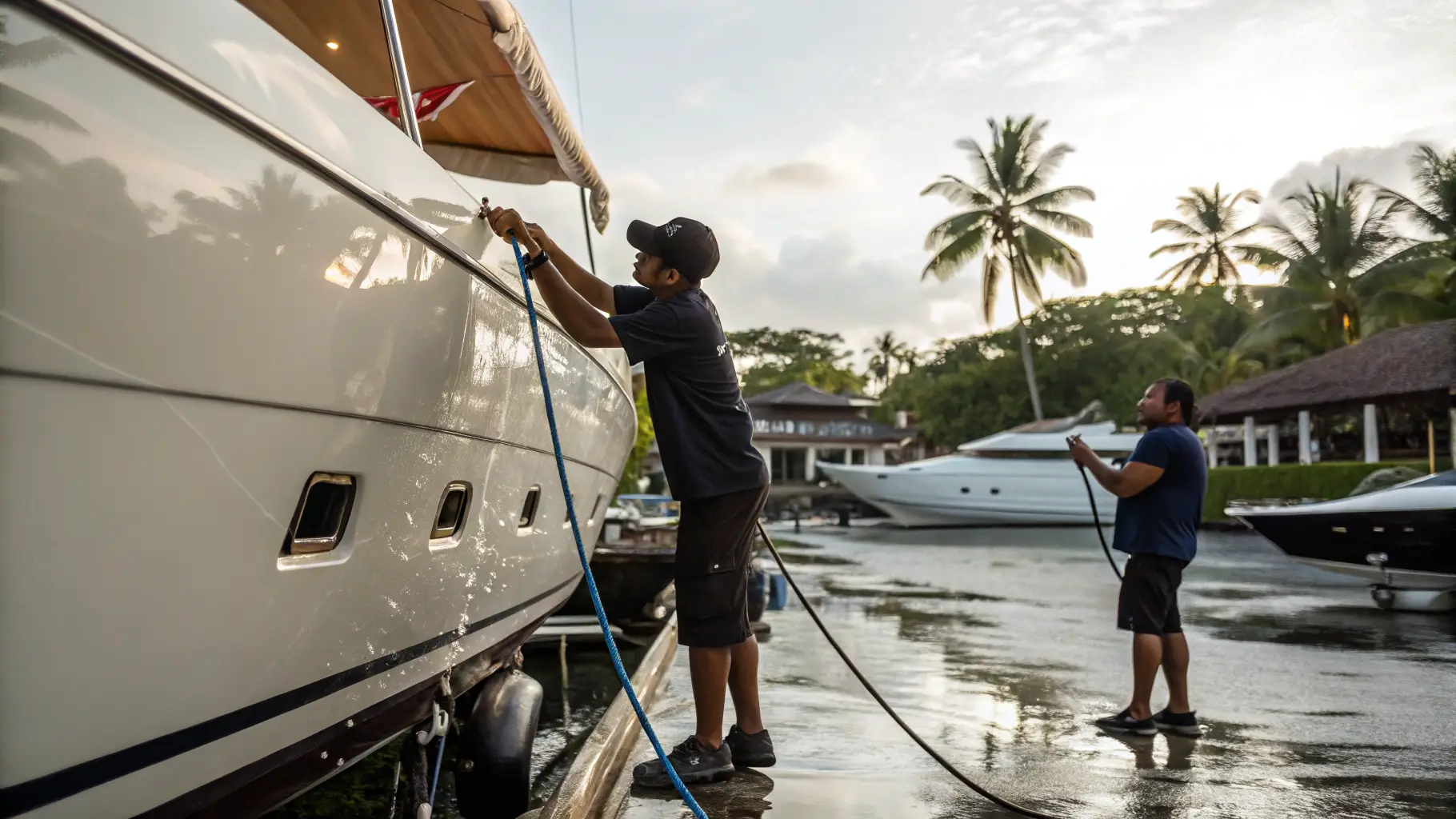
Haul-out around Bali happens on slipways and by crane-and-hardstand arrangement, concentrated around Benoa and Serangan where the marine trades cluster. Practical capacity suits monohulls and catamarans of cruising size — the island’s own charter and ferry fleet defines the envelope, and vessels within it are hauled routinely. Above that envelope — larger motoryachts, deep-draft sailing yachts, anything needing a travel lift measured in the hundreds of tonnes — the honest answer is elsewhere: Batam’s commercial yards at the Singapore doorstep, or Surabaya’s shipbuilding belt, both reachable and both covered in our class and compliance notes for survey dockings. The desk’s first service on any yard enquiry is exactly this sizing conversation, before anyone commits a delivery passage.
What Bali Trades Do Well
Within the envelope, the value is real. Antifouling and topside paint: skilled crews, patient preparation, tropical-schedule pricing. Woodwork: some of the world’s best boat carpenters work here — phinisi builders’ cousins, comfortable replacing planking, refitting interiors and matching joinery that European yards would quote in multiples. Glasswork and gelcoat: competent and improving, with the charter fleet providing constant practice. General mechanical: engine servicing, shaft and prop work, welding and fabrication through the machine shops that also serve our watermaker repair network. Where the island thins out: certified specialist work — rig surveys to insurance standard, complex hydraulics, manufacturer-warranty electronics — which fly in as technicians or route the boat out.
Scheduling a Haul-Out That Ends on Time
Tropical yard time runs on materials and weather more than labour: antifoul and paint need dry windows, so the dry season carries the schedule premium, and imported materials — specific antifouls, gelcoats, sealants — must be confirmed in stock or shipped before the boat comes out, because a hull waiting on a paint tin occupies hardstand at daily rates. The working pattern our desk runs: survey and quote afloat where possible, materials landed and verified, slipway slot booked against a realistic work list, daily photo reporting while the owner is away, and the splash date protected by refusing scope creep mid-haul. Boats managed this way come out for ten days and go back in on the eleventh.
Costs in Working Figures
Value is the island’s argument: skilled labour rates sit well below Mediterranean or Australian equivalents, slipway and hardstand fees are moderate, and a routine haul — pressure wash, antifoul, anodes, survey — on a cruising monohull lands in the low-to-mid four figures USD depending on size and paint choice, with materials as the swing item since imports carry duty and freight. Woodwork and refit pricing rewards the patient: day-rate craftsmanship makes ambitious interior projects viable here that would be unaffordable elsewhere. Everything quotes itemised through one account, materials at documented cost.
The Decision Tree
Routine bottom job on a cruising-size hull: Bali, in the dry season, booked ahead. Wood restoration or interior refit: Bali, emphatically, with time allowed. Insurance survey docking within the size envelope: Bali with the surveyor scheduled — the paperwork side is in our yacht survey guide. Major refit, big-yacht docking, warranty specialist work: stage to Batam or Singapore, and use Bali for everything before and after. Owners running this tree through the owner desk programme get the island’s genuine strengths at the island’s genuine prices — with nobody pretending a slipway is a shiplift.
A Ten-Day Haul, Day by Day
The routine bottom job, run properly, looks like this. Day one: haul on the morning tide, pressure wash while the bottom is wet, first inspection photos to the owner by evening. Day two: surveyor’s walk if one is booked, work list confirmed against reality — always slightly different from the quote’s assumptions. Days three to five: preparation, the stage everything else depends on — sanding, fairing, the patches that needed epoxy nobody predicted, anodes off and measured. Day six: first antifoul coat in the morning’s dry window; day seven: second coat, waterline detail. Day eight: propeller and shaft checks, seacocks serviced, transducers cleaned and greased. Day nine: the accumulated small list — a skin fitting here, a trim tab there — plus the owner’s photo review and sign-off. Day ten: splash on the tide, engine run, stern gland watched, mooring lines on. Weather can stretch it; scope creep definitely will. The desk’s role is guarding the list, the materials and the calendar so day ten stays day ten.
Frequently Asked Questions
Can yachts haul out in Bali?
Yes, within an honest envelope: slipways and crane-hardstand arrangements around Benoa and Serangan handle cruising-size monohulls and catamarans routinely — the island’s own charter fleet defines the capacity. Larger vessels needing serious travel-lift tonnage stage to Batam or Surabaya yards instead.
What repair work is Bali best at?
Antifouling and paint with patient preparation, exceptional boat carpentry from the phinisi-building tradition, competent glasswork, and general mechanical through the local machine shops — all at labour rates well below Western equivalents. Certified specialist work — rigs, complex hydraulics, warranty electronics — flies in or routes out.
How much does a haul-out in Bali cost?
As working figures: a routine haul — wash, antifoul, anodes, survey — on a cruising monohull lands in the low-to-mid four figures USD, size and paint dependent, with imported materials as the swing item. Hardstand runs at moderate daily rates, which is why materials are confirmed before the boat comes out.
When should a boat skip Bali and go to Batam?
When the vessel exceeds the island’s slipway envelope, when class dockings need certified big-lift facilities, or when manufacturer warranty work demands authorised specialists. The efficient pattern uses Batam or Singapore for the big docking and Bali for everything before and after it.
Keep reading

Owner Desk
Living Aboard in Bali: Moorings, Long-Stay Reality and the Shore Desk
Liveaboard life in Bali is workable year-round, but it is not effortless. The island has one commercial marina…
7 min read
Owner Desk
Vessel Caretaking in Bali: Wet-Season Programs for Absent Owners
Leaving a yacht in Bali through the November–March wet season is entirely viable — boats do it every…
6 min read

Owner Desk
Basing a Yacht in Indonesia: The Owner’s Orientation
Basing a yacht in Indonesia is one of cruising's better-kept arrangements: a 17,000-island playground on the doorstep, capable…
6 min read