
Leaving a Yacht at the Gilis or Medana Bay: Caretaking Between Seasons
Bali Yacht Concierge Service Editorial Desk 7 min read

West Lombok quietly solves a problem Bali cannot: where to leave a yacht between seasons without a marina bill that stings or a roadstead that worries you. Medana Bay, on Lombok’s north-west corner opposite the Gili Islands, offers genuine shelter, moorings and haul-out support with a cruiser-friendly culture — and the Gilis themselves add mooring options for shorter gaps. The arrangement works superbly with one condition attached: somebody competent visits the boat.
Why Medana Bay Works
The bay’s geography does the heavy lifting: protection from the north-west monsoon’s weather that makes Bali’s east-facing roadsteads untenable, holding and mooring options in workable depths, and a shore operation accustomed to visiting yachts — moorings, a hardstand option for smaller vessels, and staff who understand that cruisers leave boats and fly home. Rates sit well below Bali marina levels, which is the honest reason many owners cross the strait. Set against the alternatives in our marina berths and rates comparison for Indonesia, Medana is the value entry for lay-up, with the trade-off being distance from Bali’s deeper technical trades.
The Gilis for Shorter Gaps
Off Trawangan, Meno and Air, moorings on the sheltered sides serve yachts pausing weeks rather than months — convenient when the crew flies out after a dive programme like our five-day Gili itinerary and returns within the season. The islands’ limits are structural: exposed to season shifts, no hardstand, and services that support tourism rather than vessels. For anything beyond a few weeks, or across the monsoon change, the prudent move is the short hop to Medana’s protection. Anchoring unattended anywhere in the Gilis’ coral-protected waters is not a lay-up plan; it is a claim waiting to be filed.
Caretaking: the Non-Negotiable Layer
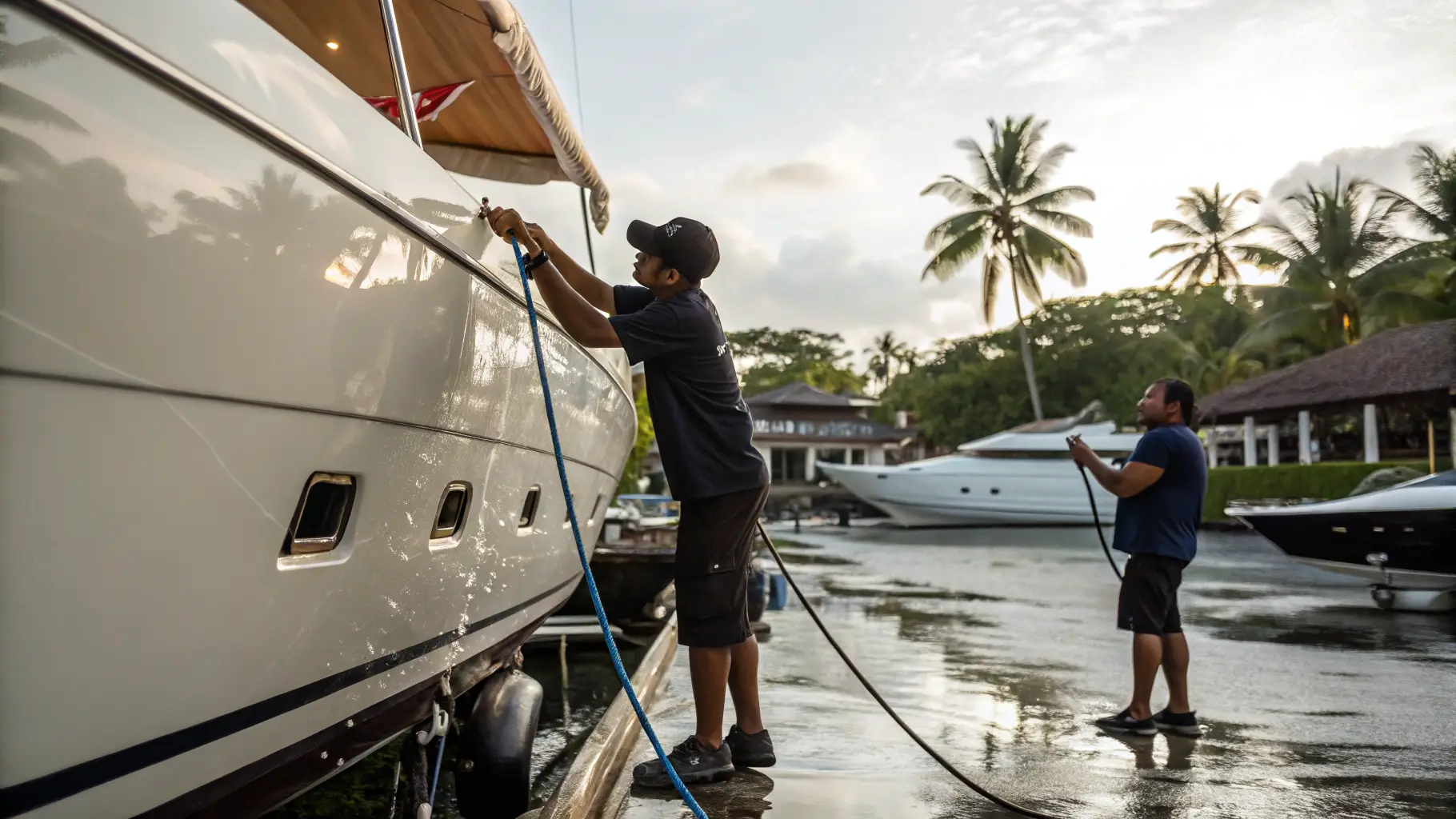
Distance makes caretaking more important at Lombok, not less — the owner cannot drop by, so the visit rhythm substitutes. The programme mirrors our Bali standard, detailed in the wet-season caretaking guide: fortnightly or weekly visits checking mooring gear and chafe, bilges, batteries, ventilation and covers, with dated photo reports the same day and automatic extra visits after squall events. At Medana the desk works with resident staff for the physical visits and layers our reporting, document calendar and escalation on top: if a bilge count trends wrong, the owner and our coordinator know before it becomes a haul-out.
Paperwork Does Not Take the Season Off
A vessel left at Lombok still ages administratively: temporary import windows tick, insurance renews, mooring agreements roll over, and any skeleton crew needs visa continuity. Insurers also read lay-up arrangements closely — named location, attended versus unattended, mooring specification — and a mismatch between the policy schedule and reality is discovered at exactly the wrong moment. The desk’s document calendar under the owner care desk in Bali tracks the dates, and we paper the mooring and caretaking arrangement so the insurer sees a managed vessel, not an abandoned one.
Costs and the Decision
Working figures in USD: a Medana mooring with basic yard oversight runs to modest monthly money — typically hundreds, not thousands; adding a structured caretaking programme with reporting lands the all-in comfortably below a Bali pontoon berth alone. The Gilis price similarly for mooring but without the lay-up infrastructure. The decision tree is short: gap under a month in-season, a Gili mooring with visits works; anything longer or crossing the monsoon, Medana Bay with a caretaking rhythm; need for deep technical work during the gap, position the boat to Bali first — the yard landscape is in our Bali repair yards guide — then lay up at Lombok.
The Crossing Plan: Positioning to Lombok
The lay-up begins with the delivery leg, and the Lombok Strait deserves its reputation. The current between Bali and Lombok runs south hard for much of the year — several knots in the channel’s core — so the crossing plans like a river ferry: depart early on the day’s calm, aim high of the destination, let the stream do the arithmetic. Northabout routes via the Gilis suit boats coming from Amed; southabout via the strait’s narrows suits departures from Benoa and Sanur, with respect paid to the tide-race zones off the island corners. It is a half-day passage in settled trade-season weather and an honest little sea in the transitions. Crews delivering a boat for lay-up carry the paperwork already arranged — mooring confirmation, agent notification, insurance note — so the arrival at Medana is a handover, not a negotiation. The desk runs this as one movement: crossing weather, arrival window, walkthrough, flight home.
Frequently Asked Questions
Is Medana Bay a safe place to leave a yacht?
Yes, by regional standards: real shelter from the north-west monsoon, established moorings, a hardstand option for smaller boats and staff used to absent owners. Safety is completed by a caretaking rhythm — scheduled visits with reports — and by papering the mooring so your insurer recognises a managed lay-up.
Can I leave my yacht on a mooring at the Gili Islands?
For weeks in-season, yes, on the sheltered-side moorings with arranged visits. For months or across the monsoon change, no — the islands lack lay-up infrastructure and exposure shifts with the season. The standard play is Gilis for short gaps, Medana Bay across the channel for real lay-ups.
What does lay-up at Medana Bay cost compared to Bali?
Materially less: mooring plus basic oversight runs to hundreds of US dollars monthly as a working figure, and adding structured caretaking with photo reporting still lands below a Bali marina berth alone. The trade-off is distance from Bali’s deeper technical trades for major work.
What should be arranged before leaving the boat at Lombok?
Four things: the mooring or hardstand contract in writing, a caretaking schedule with reporting, the document calendar — temporary import, insurance, visas — tracked with renewals flagged, and the insurer notified of the named lay-up location and attendance arrangement. Then fly home untroubled.
Keep reading

Owner Desk
Living Aboard in Bali: Moorings, Long-Stay Reality and the Shore Desk
Liveaboard life in Bali is workable year-round, but it is not effortless. The island has one commercial marina…
7 min read
Owner Desk
Vessel Caretaking in Bali: Wet-Season Programs for Absent Owners
Leaving a yacht in Bali through the November–March wet season is entirely viable — boats do it every…
6 min read

Owner Desk
Basing a Yacht in Indonesia: The Owner’s Orientation
Basing a yacht in Indonesia is one of cruising's better-kept arrangements: a 17,000-island playground on the doorstep, capable…
6 min read