
Vessel Caretaking in Bali: Wet-Season Programs for Absent Owners
Bali Yacht Concierge Service Editorial Desk 6 min read
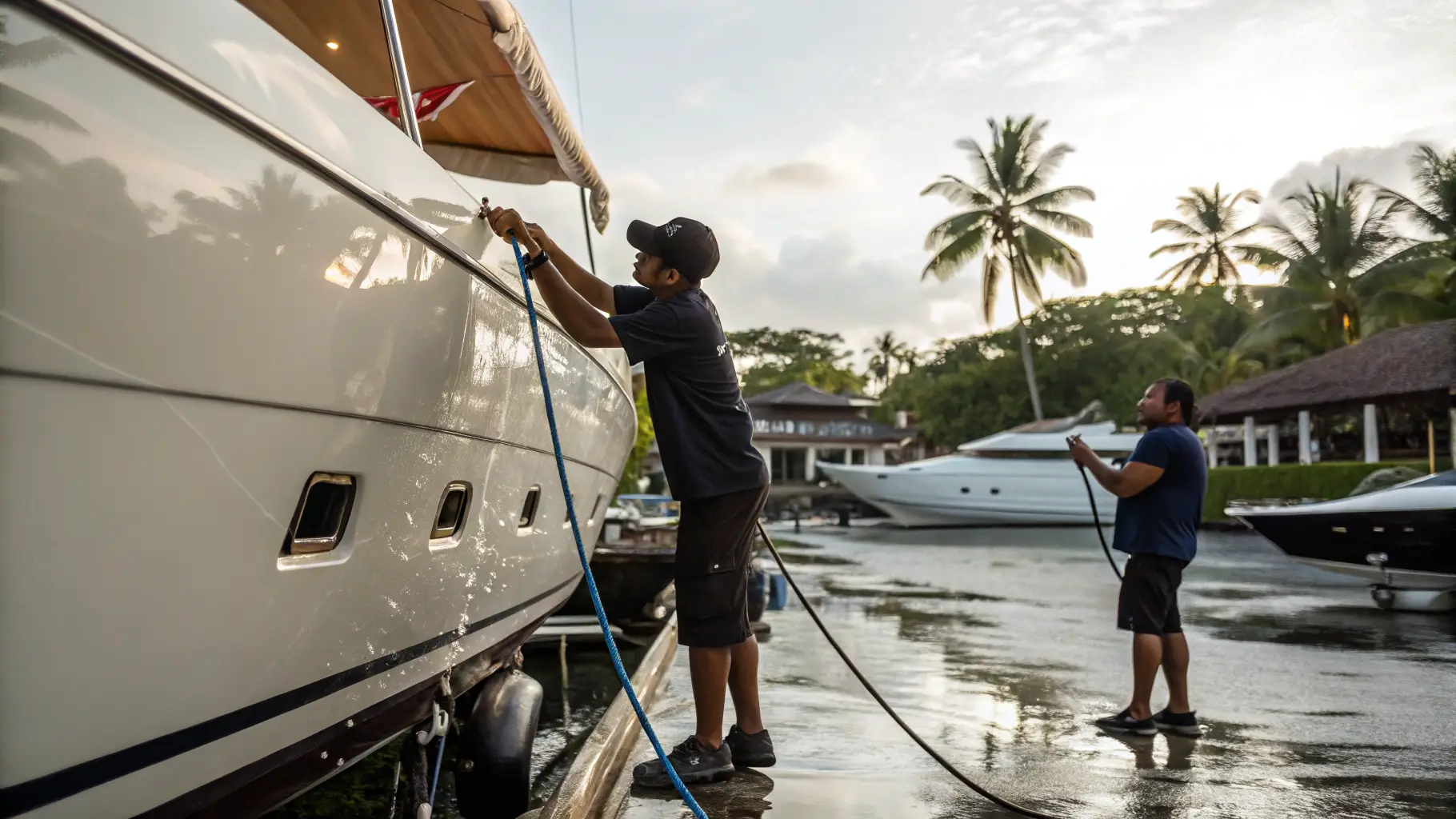
Leaving a yacht in Bali through the November–March wet season is entirely viable — boats do it every year on moorings, marina berths and hardstands — but the tropics are unsentimental about neglect. Heat, humidity and biology work continuously; a vessel visited fortnightly comes through the season fine, and a vessel ignored for four months comes back with mould, flat batteries and a foul bottom. Caretaking is modest insurance against expensive spring surprises.
Preparing the Boat for Absence
The lay-up standard our teams work to: interior stripped of anything organic — food, damp textiles, paper stores; lockers and bilges cleaned dry and left cracked open for airflow; fuel tanks pressed up with biocide dosed against tropical diesel bug; raw-water systems flushed; batteries brought to full charge with the charging plan documented; sails, covers and canvas either removed or double-lashed for squalls; and a photographed inventory of valuables landed or sealed. Two hours of preparation discipline saves two weeks of recovery, and the checklist is agreed with the captain or owner line by line before departure.
The Inspection Rhythm
Wet-season caretaking runs to a rhythm, not an on-call promise. Fortnightly as the working default — weekly for vessels afloat on moorings in exposed water: mooring gear and chafe checked, bilges sighted and pumped counts logged, battery voltages recorded, dehumidifier or airflow state confirmed, lines and fenders adjusted, engine compartment sighted for weeps, and a dated photo set sent to the owner the same day. After any named squall event, an additional visit happens without being asked. The point is trend data: a bilge that needed pumping twice this month tells a story the owner should hear early.
Mould, Batteries, Bottom: the Big Three
Three failure modes dominate tropical lay-ups. Mould is the fastest — it colonises closed, damp interiors in weeks; airflow plus dehumidification plus zero organic residue is the defence. Batteries follow: tropical heat accelerates self-discharge and cooks unmanaged banks, so the caretaking log tracks voltages and the charging regime is adjusted, not assumed. The bottom is the slow one: growth in warm nutrient-rich water shortens haul-out intervals, and a mid-season hull scrub by our dive contractor keeps speed and saildrive anodes honest. Owners planning larger works while away can pair caretaking with the yard options in our Bali repair yard and haul-out guide.
Paperwork That Does Not Sleep
The vessel’s documents age while the owner is away: temporary import windows, insurance renewal dates, mooring agreements, crew visas if a skeleton crew remains. Caretaking under our Owner Care Program for yachts based in Bali includes a document calendar with renewals flagged well ahead, so no one discovers an expired import approval in April. For owners weighing where to leave the boat at all, the sister guide on caretaking options at the Gilis and Medana Bay compares the Lombok side.
What It Costs, Honestly
As working figures in USD: a fortnightly inspection programme with reporting runs in the low hundreds per month; weekly visits, dehumidifier power and consumables move it up moderately; mooring or berth fees, diver scrubs and any parts are passed through at documented cost with receipts. The programme is quoted as a fixed monthly line so an absent owner budgets the season in one number and reads the same-day photo reports knowing exactly what each visit covered.
The Handover Visit: Starting the Season Right
The programme begins and ends with a walkthrough. Before the owner flies out, caretaker and captain — or owner — walk the boat together: every seacock’s position confirmed and photographed, battery bank state and charger settings recorded, bilge pump float switches tested, the mooring bridle inspected at deck level, covers and lashings checked hand-tight, and the lay-up checklist signed off item by item. The same photographs become the baseline the fortnightly reports are read against — a new stain, a shifted cover, a voltage drifting from its recorded norm all show up because the starting point is documented. At season’s end the process reverses: a recommissioning visit runs systems before the owner’s flight lands, so the first day back aboard is sailing, not fault-finding. The two walkthroughs bracket the programme and cost an hour each; they are where most of the season’s potential misunderstandings quietly die.
Frequently Asked Questions
Can I leave my yacht unattended in Bali during the wet season?
Physically yes, wisely no. November–March brings squalls, heat and humidity that punish unvisited boats: mould, flat batteries, chafed moorings and fouled bottoms are the standard findings. A scheduled caretaking programme — fortnightly or weekly visits with reports — is what makes absence safe.
What does a Bali vessel caretaking visit include?
Mooring and line checks, bilge sighting with pump counts logged, battery voltages recorded, airflow and dehumidifier state, fender and cover adjustment, engine-space inspection and a dated photo report sent the same day. Extra visits follow any significant squall automatically.
How should a yacht be prepared before the owner leaves Bali?
Strip organics from the interior, dry and vent lockers and bilges, dose fuel with biocide, flush raw-water systems, document battery charging, remove or double-lash canvas, and photograph an inventory. The lay-up checklist is agreed line by line before departure — it prevents most wet-season damage.
What does vessel caretaking in Bali cost?
A fortnightly programme with same-day reporting runs in the low hundreds of US dollars monthly as a working figure; weekly rhythms and powered dehumidification cost moderately more. Mooring fees, diver scrubs and parts pass through at documented cost. It is quoted as one fixed monthly line.
Keep reading

Owner Desk
Living Aboard in Bali: Moorings, Long-Stay Reality and the Shore Desk
Liveaboard life in Bali is workable year-round, but it is not effortless. The island has one commercial marina…
7 min read

Owner Desk
Basing a Yacht in Indonesia: The Owner’s Orientation
Basing a yacht in Indonesia is one of cruising's better-kept arrangements: a 17,000-island playground on the doorstep, capable…
6 min read

Owner Desk
Simpson Marine and the Indonesian Owner: Where a Bali Concierge Fits In
Simpson Marine is one of Asia's largest yacht dealerships — the regional face of shipyards like Beneteau and…
7 min read