
Fueling at the Gilis and Medana Bay: Small-Harbour Bunkering Notes
Bali Yacht Concierge Service Editorial Desk 6 min read
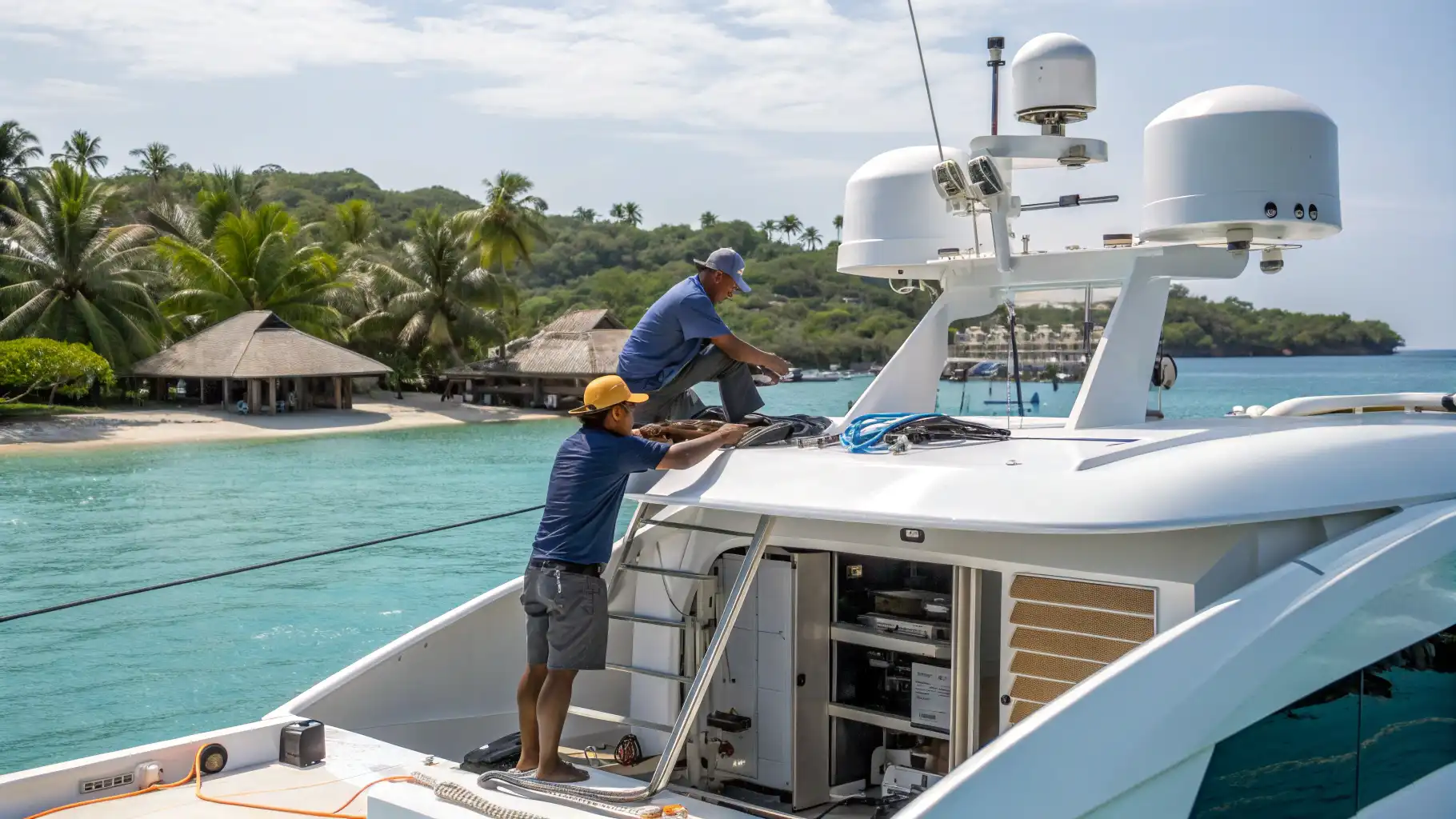
East of Bali the fuel map thins abruptly: no truck-to-quay bunkering, no barges on call, no calibrated meters. At the Gili Islands and Medana Bay, diesel arrives in jerry cans and drums, sourced from shore stations serving boats, bikes and generators alike. Yachts top up here successfully every week of the season — but the ones that do it without drama treat small-harbour fuel as a different discipline, not a smaller version of a Benoa delivery.
The Supply Reality
Around the Gilis, fuel reaches the water through island suppliers who shuttle cans by boat from Lombok; quantities are honest but modest, and lead time depends on the day’s traffic. Medana Bay does better: the yard environment can arrange drum deliveries by road from Lombok’s distribution network, stage them on the jetty and lend hands for the transfer. In both places quality varies with the supplier’s storage — drums that sat half-empty through a wet month carry water and sediment, and the only defence is your own verification at the rail. For planning purposes: hundreds of litres are routine, thousands are a project requiring notice.
Transfer Discipline: Cans, Drums and Filters
Every litre goes aboard through filtration — a proper filter funnel at minimum, a portable transfer pump with water-separating filter for drum work. Sample first: a glass jar from each drum or the first can of a batch, held to the light for water haze and sediment before anything touches the deck fill. Count containers against the invoice, because volume drift is the small-harbour version of meter error. Protect the topsides — cans swing, drums drip — and log the uplift with photos the way our Bali bunkering logistics guide describes for truck deliveries: quantity as verified, source noted, sample retained. Fuel bug loves tropical small-harbour diesel; biocide dosing at these top-ups is standard practice, not paranoia.
The Strategic Answer: Fuel in Bali, Top Up East
The clean pattern for eastbound itineraries is strategic: leave Benoa with tanks pressed full from a metered, tested delivery arranged through our fuel and technical desk, run the Gilis and Lombok leg on capacity, and treat small-harbour uplifts as range extension rather than primary supply. Westbound from Komodo, Medana Bay is the sensible staging top-up before the strait crossing. Generators and tenders change the math — their steady consumption is exactly what jerry-can resupply handles well, keeping the main tanks’ tested fuel for the engines that matter most.
Arranging It Through the Desk
What coordination adds at small harbours is mostly certainty: confirmed quantities held against your ETA rather than hoped for on arrival, suppliers we have used before with storage we have seen, drum staging at Medana timed to your berth or mooring window, and the paperwork — receipts, quantities, samples — folded into the same consolidated account as the rest of the leg. For crews continuing east, the same forward-planning logic applies at Labuan Bajo and beyond, where our Komodo and Raja Ampat support notes pick up the trail.
Quick Reference for the Log
Gilis: jerry-can resupply through island suppliers, modest quantities, lead time varies, filter everything, ideal for tender and generator needs. Medana Bay: drum deliveries by road arrangement, workable quantities with notice, jetty staging and helping hands, the east’s best small-harbour option. Both: sample before transfer, count containers, dose biocide, log with photos. And the golden rule stands — the best-priced fuel east of Bali is the fuel you loaded in Bali.
Quantity Planning: the Arithmetic of Small Harbours
Small-harbour fuel planning is a simple sum done honestly. Main tanks’ capacity minus current soundings gives the true uplift needed; divide by jerry-can or drum size and the logistics reveal themselves — 800 litres is forty cans handled twice each, a genuine half-day of labour, or four drums and a transfer pump, an hour’s pumping. Add the hidden lines: tender consumption on the delivery runs themselves, generator burn while the transfer happens, and a margin for the leg ahead that respects the coast’s thin options. Then decide what actually needs to move: topping the mains for the Komodo leg is a Medana drum job with notice; keeping the generator and tenders fed for a Gili week is a can service the island suppliers handle routinely. Crews that do this arithmetic before arriving order once, correctly; crews that guess order twice and wait twice. The desk runs the numbers with the engineer before the boat leaves Bali.
Frequently Asked Questions
Can yachts refuel at the Gili Islands?
Yes, in the small-harbour sense: island suppliers shuttle diesel by jerry can from Lombok in modest quantities with variable lead time. Filter every litre, sample first, and treat Gili fuel as range extension for tenders and generators rather than primary supply for the main tanks.
How does bunkering work at Medana Bay?
Better than the islands: drum deliveries can be arranged by road from Lombok’s distribution network, staged on the jetty with helping hands for the transfer. Workable quantities need notice. Verification stays yours — sample each drum, count containers, filter into the tank and log the uplift.
How do I protect fuel quality from jerry-can deliveries?
Three habits: sample a glass jar from each drum or first can and check for water haze and sediment; transfer everything through a filter funnel or water-separating pump; and dose biocide, because tropical small-harbour diesel carries bug risk. Photograph and log quantities against the invoice.
Should I fuel in Bali or wait for Lombok?
Fuel in Bali: leave Benoa pressed full from a metered, tested delivery and use eastern small harbours as top-ups. Eastbound, that turns the Gilis leg into a capacity run; westbound from Komodo, Medana Bay is the staging top-up before the strait. The best-priced eastern fuel is Bali fuel.
Keep reading
Cruising Guides
Batam for Yachts: Anchorages, Nongsa Berths and Western-Gateway Bunkering
Batam is where many yachts meet Indonesia for the first time: a clearance-capable island twenty kilometres off Singapore,…
7 min read

Cruising Guides
Anchoring at Amed: East Bali’s Quiet Roadstead for Visiting Yachts
Amed is the anchorage Bali forgot to commercialise: a string of black-sand coves under Mount Agung on the…
7 min read
Cruising Guides
Sanur Roadstead: Anchoring Off Bali’s East-Coast Sandbar
Sanur is Bali's understated roadstead: a long east-facing beach behind a fringing reef, twenty minutes from the airport,…
6 min read