
Living Aboard in Bali: Moorings, Long-Stay Reality and the Shore Desk
Bali Yacht Concierge Service Editorial Desk 7 min read

Liveaboard life in Bali is workable year-round, but it is not effortless. The island has one commercial marina basin, a handful of moorings, open roadsteads that change character with the monsoon, and shore logistics that reward local knowledge. Long-stay crews who do well here solve four things early: a secure berth or mooring plan, fresh water, waste discipline and a reliable shore contact.
This guide sets out the honest picture our desk gives owners who ask about staying aboard in Bali for a season or longer — what works, what wears you down, and where a shore desk earns its keep.
The Real Options: Marina, Mooring or Anchorage
Benoa’s marina berths suit boats that want power, water on the pontoon and easy taxi access, but space is finite and long-stay berths go to vessels that book ahead; comparative numbers across the archipelago are on our marina berth and rates overview for Indonesia. Moorings off Serangan are the traditional liveaboard compromise: sheltered in the south-east trades, gentler on the budget than a pontoon, with dinghy access to slipways and warungs. Open anchoring is free but seasonal — the Sanur and Amed roadsteads are lovely in the dry season and untenable in a north-west blow, so liveaboards rotate anchorages with the monsoon rather than sitting in one spot all year.
Water, Power and the Daily Round
Away from a pontoon, fresh water arrives by jerry can, tender run or scheduled barge top-up, and most long-stay crews budget for a watermaker service rather than relying on shore fills alone. Solar carries the house load for well-set-up boats; generator hours climb in the wet season when cloud cover thickens. Provisioning is genuinely good — Denpasar’s markets and importers cover most galley lists — and laundry, gas bottle swaps and fuel jerry runs all work once you know which supplier answers the phone. That address book is the practical difference between a smooth month and a frustrating one.
Waste, Holding Tanks and Being a Good Neighbour
Bali has no pump-out network, and the roadsteads where liveaboards sit are the same waters locals fish and surf. Responsible long-stayers run holding-tank discipline, discharge well offshore on passage, and land segregated rubbish through arranged collection rather than the beach bins. Oil, filters and batteries need a receiving chain — our desk books licensed disposal so nothing questionable leaves the boat informally. It matters for the anchorage’s reputation as much as the regulator’s.
Seasons: When Bali Is Easy and When It Bites
From May to October the south-east trades give settled conditions on the south and east coasts; this is the easy half of the year. November to March brings the north-west monsoon: squalls, swell into west-facing roadsteads and days when the dinghy run to shore is wet or unwise. Long-stay boats either take a marina berth for the wet season, shift to the lee at Amed or Lombok’s Medana Bay, or accept a rolly, watchful few months. Cyclone risk is low this far north, but a dragging neighbour in a January squall is a genuine hazard — another argument for a maintained mooring over a casual anchor.
What the Shore Desk Does for Liveaboards
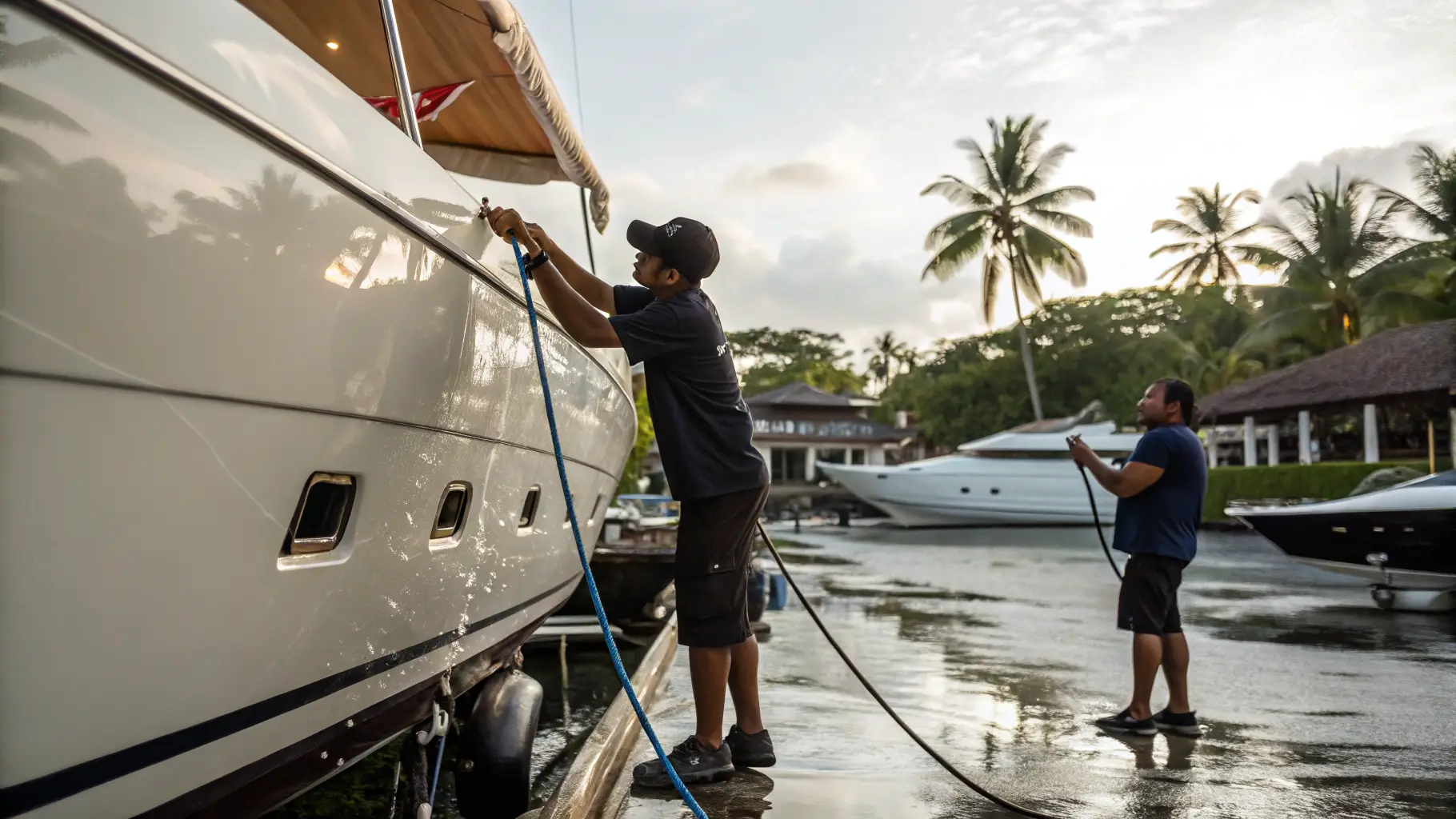
Our Owner Care Program in Bali was built for exactly this pattern: a named coordinator who books the mooring or berth, schedules water and fuel, runs provisioning drops, receives spares through customs and keeps visa and vessel paperwork ahead of their expiry dates. Crews staying aboard use the desk as their Indonesian address and their 02:00 phone number. If you plan to leave the boat unattended between seasons, the same team runs inspection visits — the detail is in our guide to wet-season vessel caretaking in Bali.
Budgeting a Long Stay
As working figures: a maintained mooring costs a fraction of a pontoon berth, marina berths in Bali price per metre per day with monthly rates negotiated ahead, and a modest liveaboard couple’s shore spend — water, fuel runs, laundry, transport, eating like a local — sits comfortably below Western marina-town levels. The variables that move the budget are berth choice, generator hours and how much imported provisioning you insist on. We quote long-stay support in USD, itemised, before you commit.
A Liveaboard’s Week in Practice
A settled dry-season week off Serangan runs to a rhythm. Monday: water top-up and laundry drop, arranged the previous evening by message. Tuesday: engine hour and bilge log, a look at the mooring bridle where it chafes. Midweek: the market run — Sindhu or Badung early, back before the heat, fish bought off the morning boats. Thursday: gas bottle swap or fuel jerries if the tender has been busy. Friday: the social layer — sundowners tender-raft with the neighbouring boats, the anchorage’s informal net of weather talk and spare-part swaps. Somewhere in the week a squall test: everything on deck lashed as if the forecast lies, because occasionally it does. The pattern is unhurried but never idle; tropical boats reward daily small attentions and punish deferred ones. Owners who fly out mid-season hand this exact rhythm to the desk’s caretaking roster, and the week keeps happening without them — logged, photographed and reported.
Frequently Asked Questions
Can I live aboard my yacht in Bali year-round?
Yes, with a seasonal plan. May to October is settled in the south-east trades; the November to March north-west monsoon pushes liveaboards to sheltered moorings, a marina berth or the lee of Amed and Lombok. Crews who rotate with the season live aboard comfortably all year.
Is there a long-term mooring available in Bali?
Moorings off Serangan are the usual long-stay solution and are arranged through local operators rather than a public booking system. The desk confirms a maintained mooring, checks its ground tackle history and puts the agreement in writing before you commit to it.
How do liveaboards get fresh water in Bali?
Boats on pontoon berths fill from the dock. On moorings and at anchor, water comes by jerry can, tender or arranged barge top-up, so most long-stay crews service their watermaker and treat shore fills as the backup rather than the main supply.
What does shore support for a liveaboard cost?
Long-stay support is quoted monthly under the Owner Care Program, from USD 950 per month, with third-party charges such as mooring fees, water and fuel passed through at documented cost. A one-page itemised quote in USD comes before any commitment.
Keep reading
Owner Desk
Vessel Caretaking in Bali: Wet-Season Programs for Absent Owners
Leaving a yacht in Bali through the November–March wet season is entirely viable — boats do it every…
6 min read

Owner Desk
Basing a Yacht in Indonesia: The Owner’s Orientation
Basing a yacht in Indonesia is one of cruising's better-kept arrangements: a 17,000-island playground on the doorstep, capable…
6 min read
Owner Desk
Simpson Marine and the Indonesian Owner: Where a Bali Concierge Fits In
Simpson Marine is one of Asia's largest yacht dealerships — the regional face of shipyards like Beneteau and…
7 min read