
Raja Ampat Marine Park Fees and Permits for Visiting Yachts
Bali Yacht Concierge Service Editorial Desk 5 min read
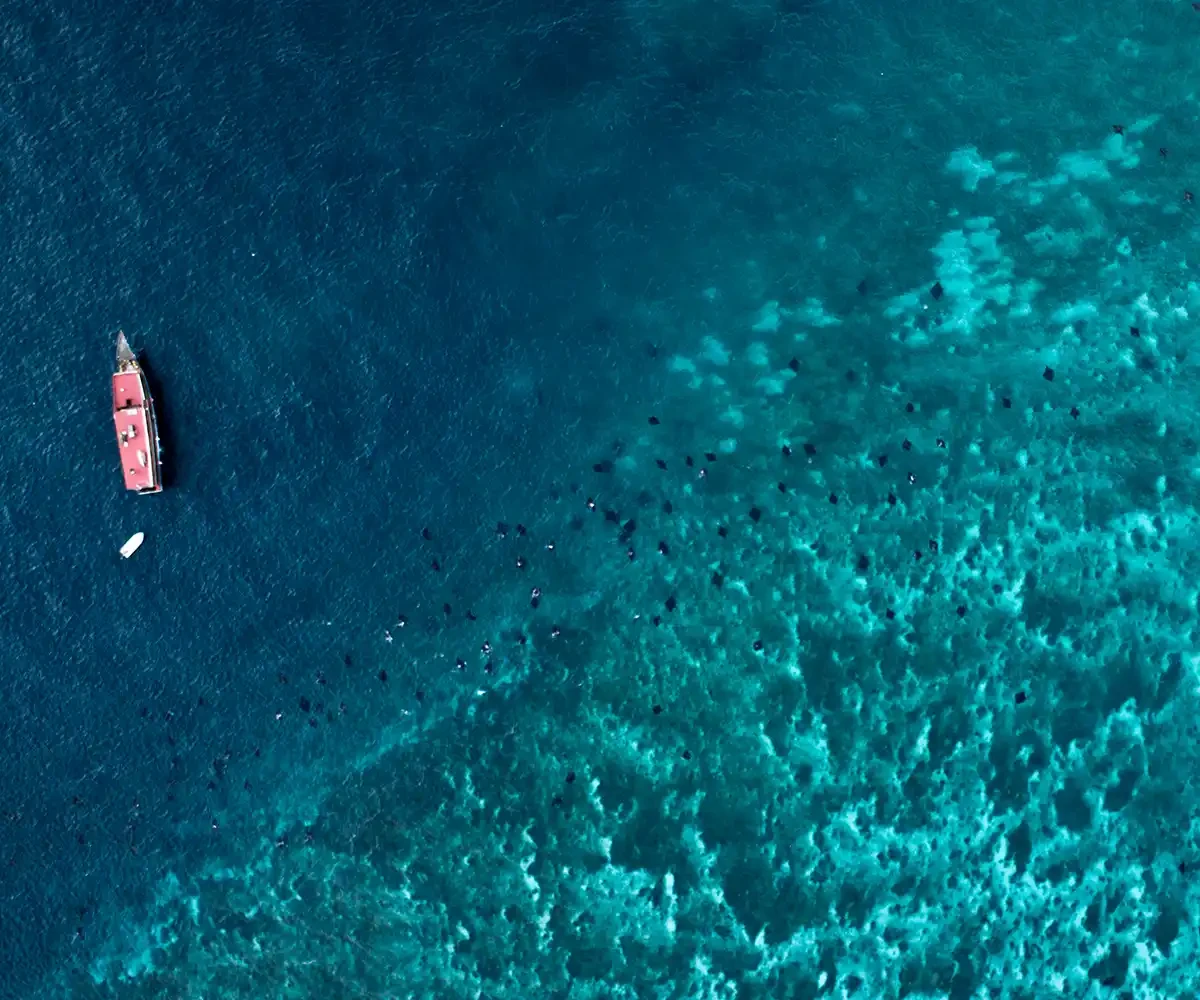
Every person who enters Raja Ampat by yacht — owner, guest, and in most cases crew — needs a Raja Ampat Marine Park entry tag, the environmental services fee card issued by the park authority in Waisai. The published tariff is IDR 1,000,000 per international visitor (roughly USD 60–65), with Indonesian nationals paying half; the tag is valid twelve months from issue. It is a per-person fee, not a per-vessel one, so an eight-guest, ten-crew yacht budgets for eighteen tags, not one.
The vessel itself needs separate paperwork: a foreign-flagged yacht must hold a valid cruising approval (CAIT) before entering Indonesian waters, then complete customs, immigration, quarantine, and port clearance (CIQP) at a designated port of entry, usually Sorong. In practice a clearance agent bundles the entry tags into the same file as the vessel formalities, so the boat arrives with every card already aboard.
What the entry tag actually is
The tag, often called the PIN card, is proof that you have paid the Raja Ampat environmental services fee. It is administered by the marine park management unit (BLUD UPTD) for the Raja Ampat archipelago, and the revenue funds ranger patrols, mooring infrastructure, and community conservation across the marine protected area.
The card is a waterproof tag on a lanyard. Everyone aboard should carry theirs when landing, snorkelling, or diving, because rangers check them at monitoring posts, most reliably at Piaynemo and Wayag. A yacht whose guests cannot produce tags can be sent back to Waisai to regularise, costing a full cruising day — the single most common compliance failure.
Current rates and validity
| Item | Guideline figure | Notes |
|---|---|---|
| International visitor tag | IDR 1,000,000 (≈ USD 60–65) | Per person, valid 12 months |
| Indonesian visitor tag | IDR 500,000 | Per person, same validity |
| Village and site fees | Small cash amounts, per boat or person | Piaynemo, Wayag, some village landings |
Treat these as planning figures, not quotations: rates are set by local regulation and revised from time to time. Confirm the current figure when your clearance file opens, not once the boat is mid-passage.
Where and how the tags are bought
There are three routes: the park authority counter in Waisai; the authority’s presence in Sorong; and pre-purchase through an agent, used by virtually every visiting yacht. Passport scans go in with the clearance file; the agent buys the tags and delivers the cards to the boat on arrival day. Tags stay valid for the cruise and any return within twelve months, but are personal, not pooled between rotating guest groups.
What the yacht itself must hold
The entry tag covers the people; the vessel’s file is separate and comes first. A foreign-flagged yacht needs its cruising approval before crossing into Indonesian waters, then completes CIQP at the first port of entry. Full detail lives in our guide to CAIT and CIQP clearance for yachts in Indonesia; the short version:
- Cruising approval (CAIT): apply before arrival, allowing one to two weeks of lead time.
- CIQP at Sorong: the region’s designated port of entry, whether arriving from Palau, Papua New Guinea, or elsewhere in Indonesia.
- Domestic port clearance: each leg between Indonesian ports needs a sailing approval from the harbourmaster, filed by your agent.
- Indonesian-flagged charter vessels: licensing sits with the operator, so guests joining a local phinisi only need entry tags and identity documents.
A clean arrival sequences CAIT before departure, CIQP at anchor in Sorong, tags delivered aboard, and provisions handled in port before the run to Waigeo. Out of order, with tags forgotten or clearance attempted at the wrong port, each miss costs a day.
Village fees and site payments
Several landmark sites are managed by communities under customary tenure. Piaynemo and the Wayag ranger post area both collect posted fees, and some village landings ask a modest amount per boat or visitor. These payments fund the boardwalks, steps, and moorings and are cash-only, so carry small-denomination rupiah; change is scarce. An agent will confirm current amounts for your route.
The rules that come with the permit
Paying the fee also means accepting the park’s conservation rules, and rangers enforce them:
- No anchoring on reef. Use moorings where laid; otherwise anchor in sand clear of coral.
- No fishing in the tourism and no-take zones covering most areas yachts visit.
- Keep distance from mantas and other megafauna, following the local interaction code at cleaning stations.
- Ask before flying drones at village-managed sites; permission rules vary by site.
- Carry waste out. There is no disposal infrastructure in the islands; garbage returns to Sorong with the boat.
How agents bundle it into one file
A single agent file covers the CAIT lead-in, CIQP booking at Sorong, entry tags for the full manifest, harbourmaster approvals for each leg, village fee amounts, and the cash float to pay them, plus provisioning and airport transfers. The full scope is on our Raja Ampat yacht support page. Our desk arranges this through Juara Holding Group’s operators and agents; we confirm figures against current regulation and hand the captain one checklist instead of five offices.
Send us the vessel details, flag, manifest size, and intended arrival window, and we will return a fee schedule and clearance timeline for your dates. Message us on WhatsApp at +62 811-2859-0000 or email sales@balipremiumtrip.com.
Keep reading
Cruising Guides
Batam for Yachts: Anchorages, Nongsa Berths and Western-Gateway Bunkering
Batam is where many yachts meet Indonesia for the first time: a clearance-capable island twenty kilometres off Singapore,…
7 min read

Cruising Guides
Anchoring at Amed: East Bali’s Quiet Roadstead for Visiting Yachts
Amed is the anchorage Bali forgot to commercialise: a string of black-sand coves under Mount Agung on the…
7 min read
Cruising Guides
Sanur Roadstead: Anchoring Off Bali’s East-Coast Sandbar
Sanur is Bali's understated roadstead: a long east-facing beach behind a fringing reef, twenty minutes from the airport,…
6 min read